Easter Sunday and Monday saw deeply negative day-ahead power prices across North-West Europe. Weak demand, combined with strong renewable output, pushed prices below -100 €/MWh in markets including Germany, Belgium and France.
But this was not a tail-end event.
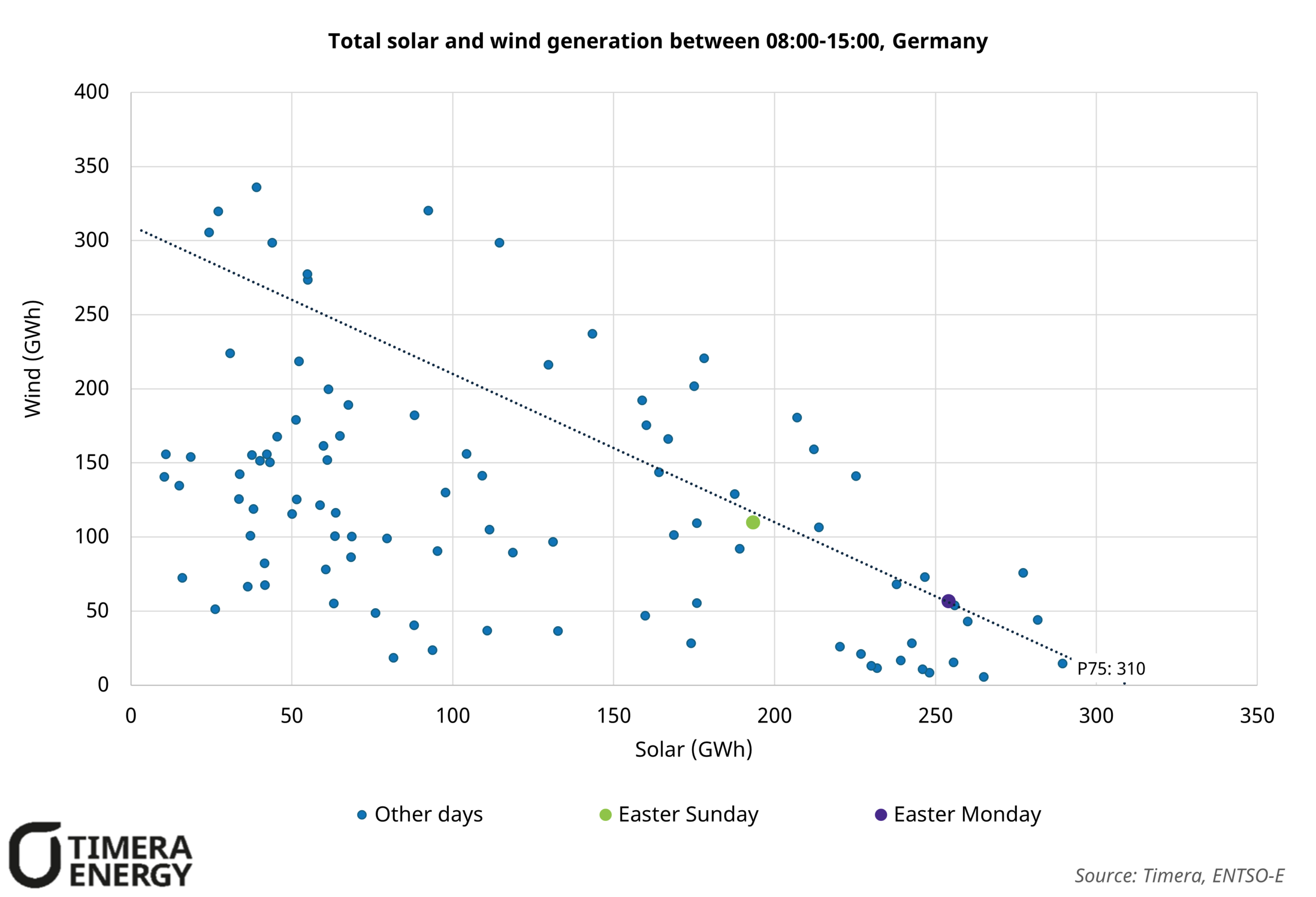
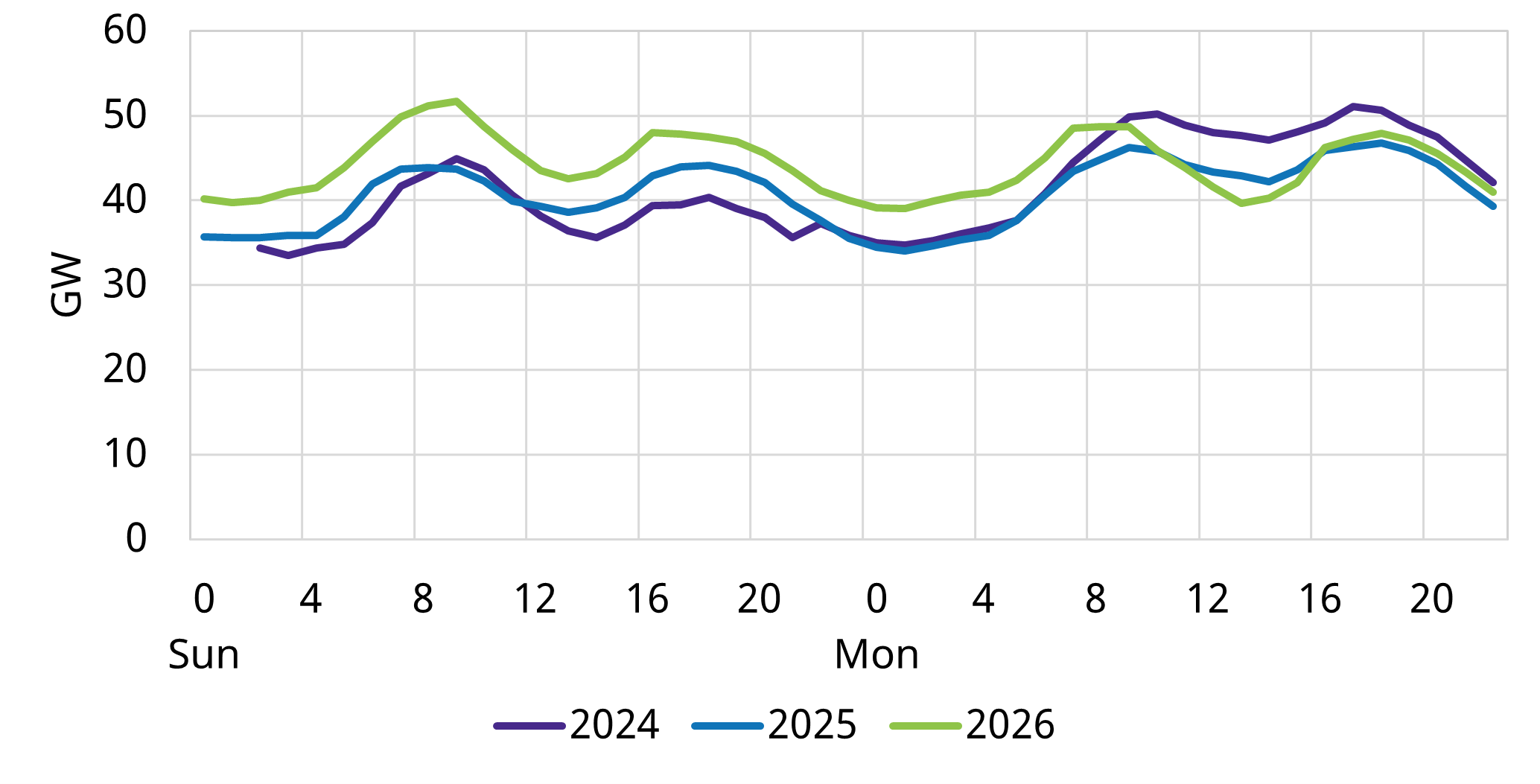
German renewable generation during peak solar hours* sat only in the upper 30th percentile of year-to-date observations. Demand was subdued, but broadly in line with Easter periods in 2024 and 2025.
In other words, the conditions driving these price outcomes were not exceptional. Deeply negative prices are no longer confined to very extreme system conditions, instead they are emerging under increasingly “normal” operating ranges.
*solar hours were selected as 08:00-15:00
Perhaps a more interesting signal came from imbalance pricing. Tight availability of downward reserve drove imbalance prices to their floor of -15,000 €/MWh in Belgium, with Germany and the Netherlands also clearing below -3,000 €/MWh. These extreme outcomes were driven by a combination of high forecast error and limited downward reserve availability, with many thermal plants offline given suppressed wholesale prices, leaving the system with little headroom to absorb excess generation.
Prices at these levels are rare, but they represent a material tail risk particularly for renewable operators who can find themselves exposed with limited ability to respond. Conversely, assets such as BESS are well positioned to monetise this volatility, capturing value at both ends of the price distribution.
Looking ahead, we expect these dynamics to intensify. As renewable penetration grows and thermal capacity retires across Europe, the frequency and severity of tail-end imbalance events is likely to increase, structural tightening that will place a growing premium on flexible assets. Timera’s proprietary fundamental price simulation can forecast imbalance prices to help operators quantify and manage this exposure (see our blog for a GB-focused deep dive, with broader applicability across European markets The rising cost of system imbalance – Timera Energy).