

Germany’s energy regulator BNetzA has released an update to the AgNes framework for grid fee allocation, providing welcome clarity for battery storage developers and investors after months of uncertainty. Grid fees for storage will be based on connection capacity, likely following the existing generator fee structure. Dynamic consumption-based grid fees remain a potential upside for BESS but introduction has been pushed out to the early 2030s.
For projects reaching FID before the framework is finalised (expected early 2027) and online before August 2029, the grid fee exemption continues to apply.
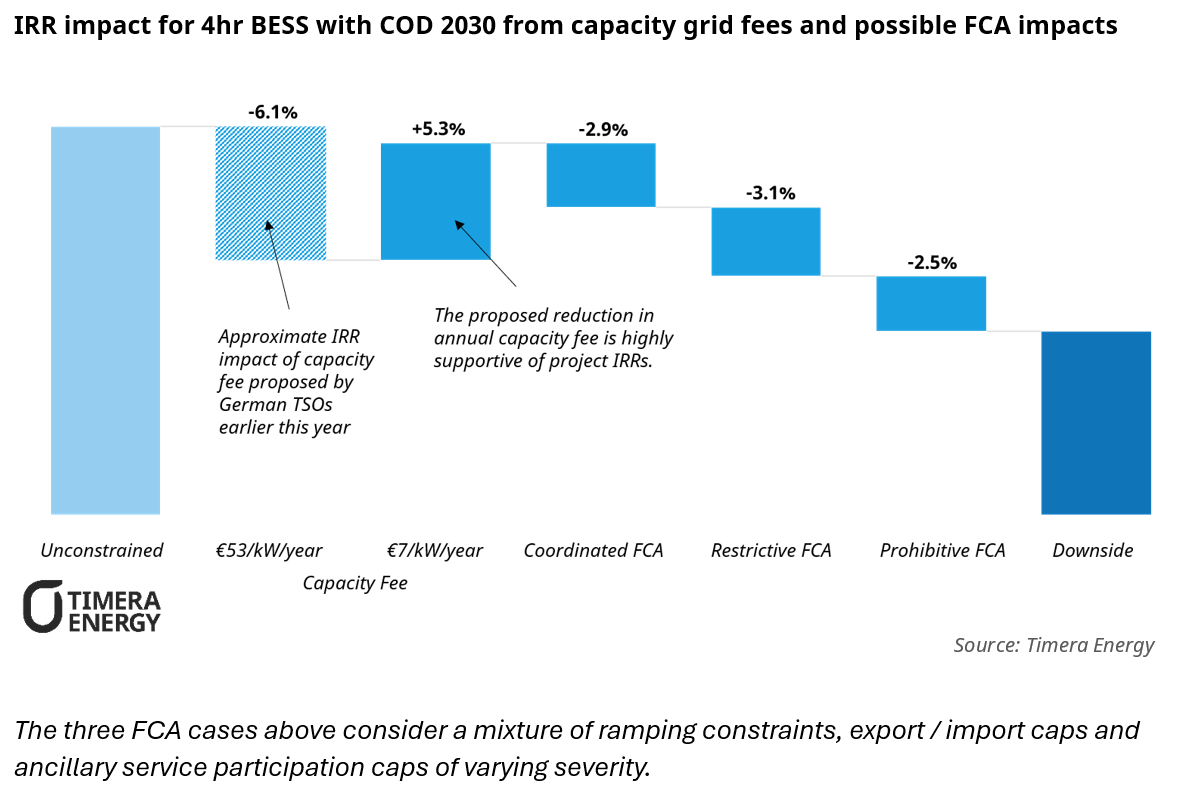
Battery storage will contribute to grid financing via a minor capacity-based connection charge, aligned with a capacity fee proposed for all generators — likely in the range of €4–7/kW/year, consistent with EU guidelines.
As the chart shows, the IRR impact on a 4hr BESS with a 2030 COD is expected to be materially lower than earlier estimates. However, the wide variety of Flexible Connection Agreement (FCA) conditions being offered can still create material additional downside on returns.
Open questions remain around fee treatment for FCA assets and the future implementation of dynamic grid fees, which could offer storage discounts in exchange for reducing redispatch costs. This week’s update nonetheless marks a significant step forward. We will explore these questions and our broader conclusions of how this development could impact the market in a longer-form blog in the coming weeks.
For more on how Timera is supporting investors and developers in modelling FCAs, dynamic grid fees, and other asset classes, contact Sam Kayne, Principal: sam.kayne@timera-energy.com.