

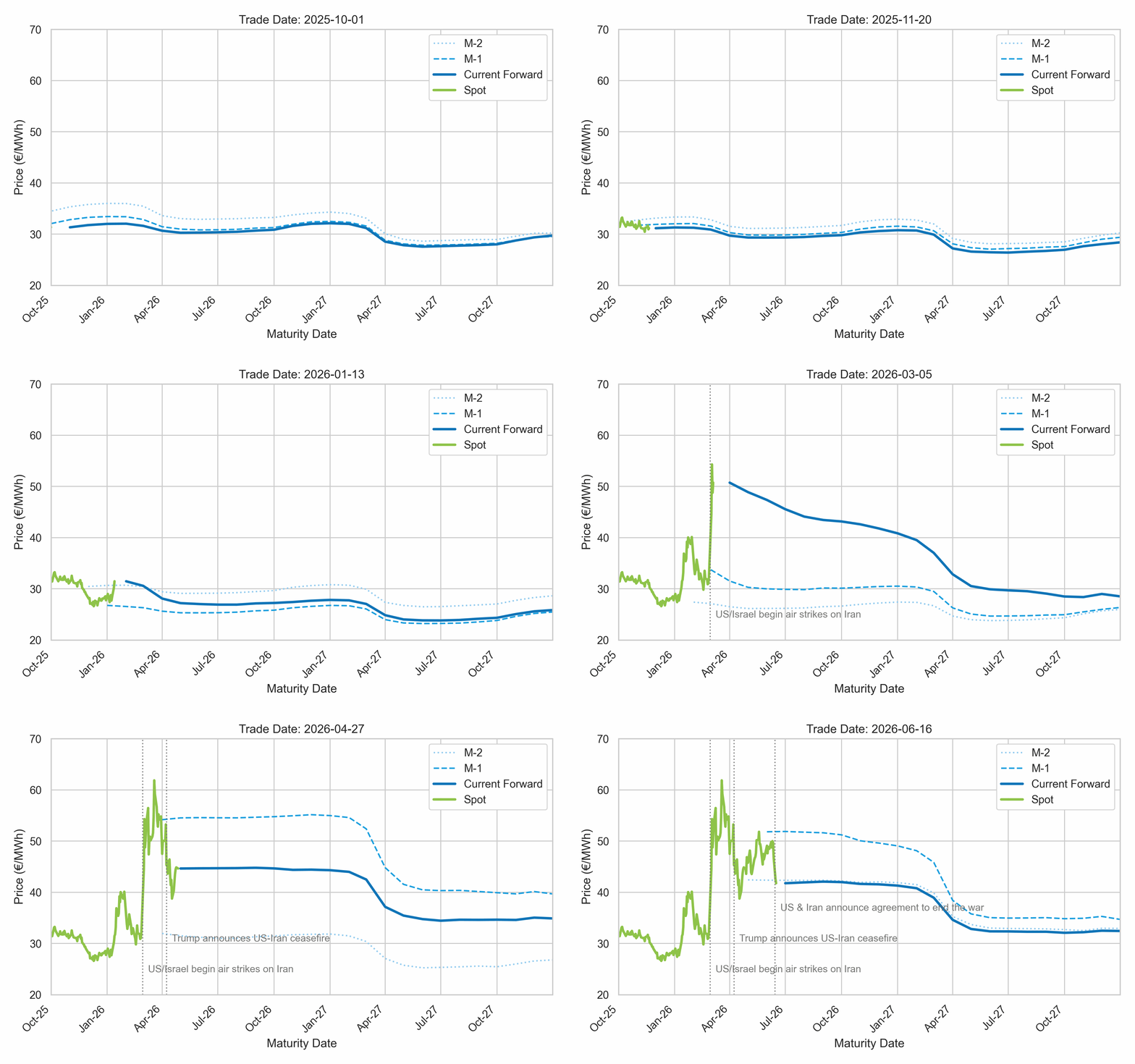
The animation of the TTF forward curve provides an engaging way to visualise the extreme price volatility caused by the Iranian crisis. Before the crisis the gas markets were in a phase of rebalancing as the gradual ramp of new LNG supply was backfilling the loss of European Russian pipeline volumes.
The reaction to the US-Iranian hostilities was brutal: front-month TTF surged above €56/MWh in the first week — the largest weekly gain since February 2022 — peaking near €62/MWh on 19 March. Disrupted Hormuz cargo flows, the loss of ~17% of Qatari LNG capacity to Iranian strikes, and low European storage all compounded.
De-escalation has been just as sharp. An early-April ceasefire cut prices over 15% in a single day to ~€45/MWh, and this week’s preliminary peace framework — including a Strait reopening — has pushed TTF to ~€42/MWh, its lowest since April. Lasting damage to Qatari supply has kept the market well above its pre-war floor.
The forward curve animation tells the more important story. Each successive snapshot — M-2 to M-1 to current — shows the shock propagating well beyond the prompt. With storage starting low, the need to refill over the injection season transmits a near-term disruption across the whole curve rather than leaving it concentrated at the front.
The swings underline how little the market knows about the crisis’s duration. A durable Hormuz reopening unwinds the single largest disruption; a relapse, or a slow Qatari restart, leaves Europe structurally tight into next winter.
We cover this further in our Q2 Global Gas Report, out to Clients later this month. Reach out to David Duncan, LNG & Gas Director (david.duncan@timera-energy.com) for a sample extract.