Belgium and Germany have just run capacity auctions with opposite results. In Belgium’s 2030-31 auction, new 4-hour batteries won 483MW of the 769MW contracted, at about €18k/MW/year of de-rated capacity. Germany’s first tender bought 5.2GW of de-rated capacity at about €155k/MW/year, all of it gas. So why did Germany pay so much more for gas?
The immediate answer is the rules. German plants must deliver 80% of capacity for 10 hours, which in practice ruled batteries out. But the better question is what each system is trying to fill.
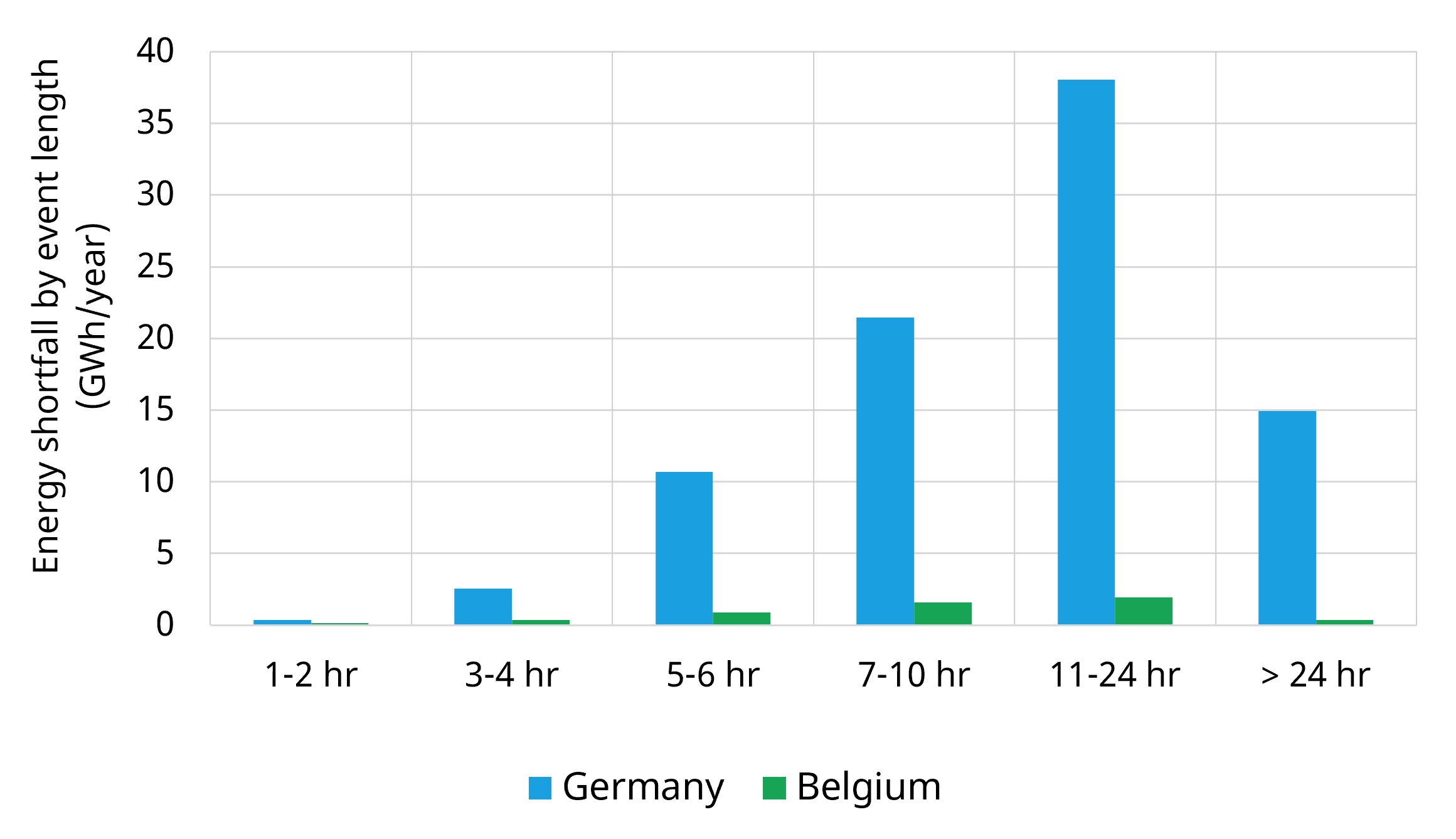
ENTSO-E’s European adequacy study (ERAA 2025) shows two very different needs (chart above). In 2030, Germany’s energy shortfall is 88GWh a year against Belgium’s 5GWh. It is also longer: events lasting over 10 hours cause 60% of Germany’s shortfall, against 43% in Belgium.
Belgium, with around 85% of its need already in place or expected, is buying a small top-up to shave peak hours, which batteries can do. Germany is building new capacity that must run through whole events. So, the price gap is not mainly about technology cost: the two countries are buying to meet different requirements.
In a longer article in two weeks, we will look at how this need evolves to 2035 and what it means for battery, gas and other flexible asset owners in both markets.