Storm Boelo, a localised NRAPM, and why winter balancing is getting more expensive
Going into winter, the GB system is becoming increasingly challenging and expensive to manage. Last weekend gave an interesting example. Storm Boelo arrived on Sunday 25 October, pushing wind output close to maximum. In northern Scotland, NESO identified a potential 70MW shortfall in downward flexibility and issued a localised Negative Reserve Active Power Margin (NRAPM) notice, asking generators in the area to make more flexibility available.
What an NRAPM means
NESO must hold enough downward reserve to reduce generation quickly if wind output beats forecast. Normally, this comes from bids in the Balancing Mechanism (BM) and from flexible assets such as batteries and pumped storage. An NRAPM warns that this reserve is forecast to fall short. A localised NRAPM applies to one part of the network, typically behind a transmission constraint where curtailing generation is the only way to manage flows. If that fails, NESO can escalate to emergency instructions.
What happened on Oct 25th
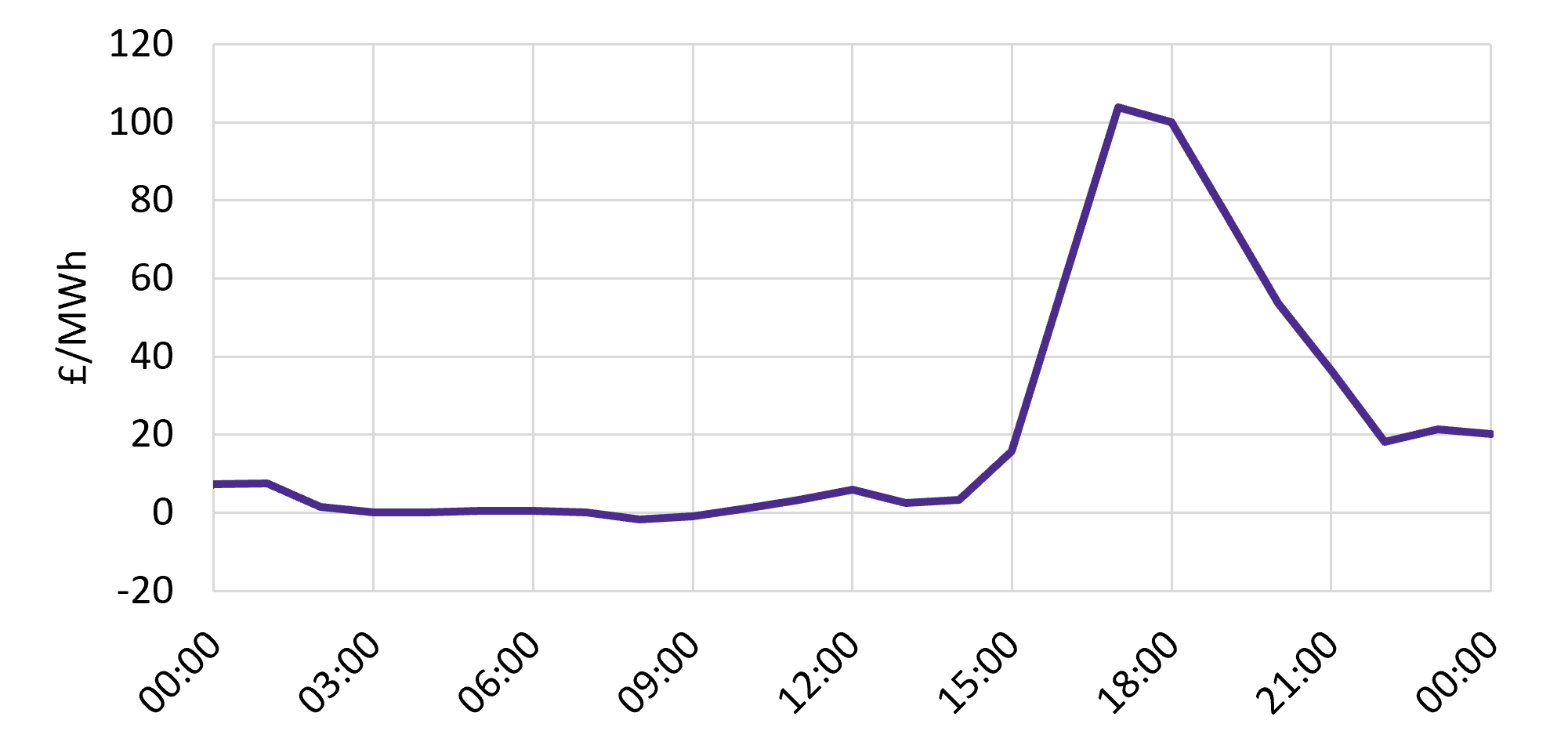
Despite near maximum wind, GB day-ahead prices hovered around zero until mid-afternoon before rising into the evening peak (chart 1). With prices not going meaningfully negative, CfD renewable plant had little reason to self-curtail, leaving NESO to find downward flexibility through the BM.
The CfD dimension
Whether a wind or solar farm curtails at negative prices depends on its route to market. CfD negative-pricing rules have tightened over time:
- Investment Contracts and Allocation Round 1 (2015): no negative pricing rule. Difference payments continue even if prices go negative.
- AR2 (2017) and AR3 (2019): no difference payment if day-ahead prices are negative for six or more consecutive hours. Shorter negative periods are still paid.
- AR4 (2022) onwards: no difference payment in any negative-price period, so self-curtailing as soon as prices dip below zero is the obvious response.
The result is a fleet with very different curtailment thresholds. Older CfD and Renewables Obligation (RO) assets, which earn certificates per MWh generated, keep running deep into negative territory. The same may be true for assets on fixed-price corporate PPAs: a wind farm paid £50/MWh with no negative-price clause might not self-curtail until prices approach negative £50/MWh.
The exchange also matters. The negative pricing rule is triggered by the CfD reference price, a volume-weighted average of the EPEX and N2EX GB day-ahead auctions. As the two can clear at different levels around zero, a generator may see negative prices on its own exchange while the reference price stays positive, or vice versa. This creates basis risk around the curtailment decision for newer CfD assets.
Balancing costs are already climbing
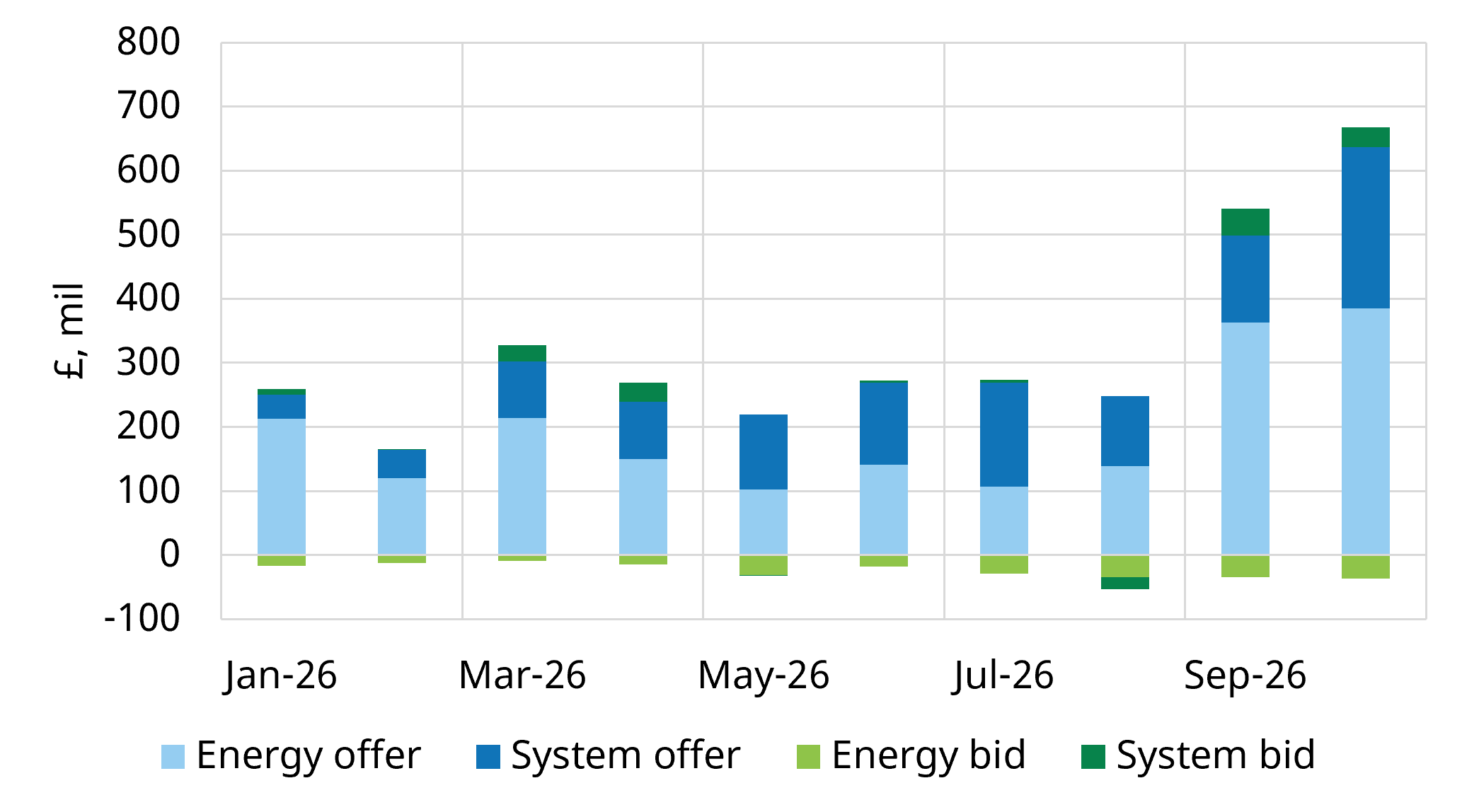
Boelo comes on the back of an expensive autumn in the BM. Balancing costs in September and October have risen sharply as shown in chart 2. The main driver has been CCGT actions. With gas prices rising, the cost of turning CCGTs up, holding them on for system needs and paying them to manage constraints has increased materially, and that flows straight through to the balancing bill.
Two sides of winter
This winter the control room will need to manage a mix of two very different types of stress event. On one side are Dunkelflaute scarcity periods with cold, still days with high demand, low wind, gas setting the price and scarcity pricing at the evening peak. On the other are NRAPM type events like Boelo, where storms drive a surplus of wind behind constraints and NESO struggles to find enough downward flexibility. These can occur within days of each other, and both are expensive to manage.
Negative prices are also a key consideration for RES assets. New offshore wind from recent allocation rounds is coming online, solar is growing fast, and a rising share of the fleet is on AR4 style terms. Interconnectors and batteries will absorb some of the surplus, but storms and sunny, windy weekends will push prices below zero more often.
What this means for asset owners
Rising balancing costs are a challenge for consumers, but they are a strong revenue opportunity for flexible assets. Batteries, gas engines and other fast responding assets can provide flexibility during periods of system stress, capturing additional value through the BM. Location matters too, with assets behind key constraints best placed to capture value from localised actions.
For wind and solar operators, forecasting negative price periods becomes a direct revenue driver, as the right curtailment decision depends on each asset’s contract terms. Negative price clauses in PPAs and co-located storage will also matter more.
How Timera can help:
Timera has supported investment decisions across a wide range of flexible assets, including BESS, gas engines and CCGTs, providing the analysis that underpins valuation, financing and route to market strategy. We have also helped renewable developers and investors understand their exposure to negative pricing, including the impact of CfD terms, PPA structures and basis risk between N2EX and EPEX day-ahead prices. If you would like to discuss how these dynamics affect your portfolio, please get in touch.