

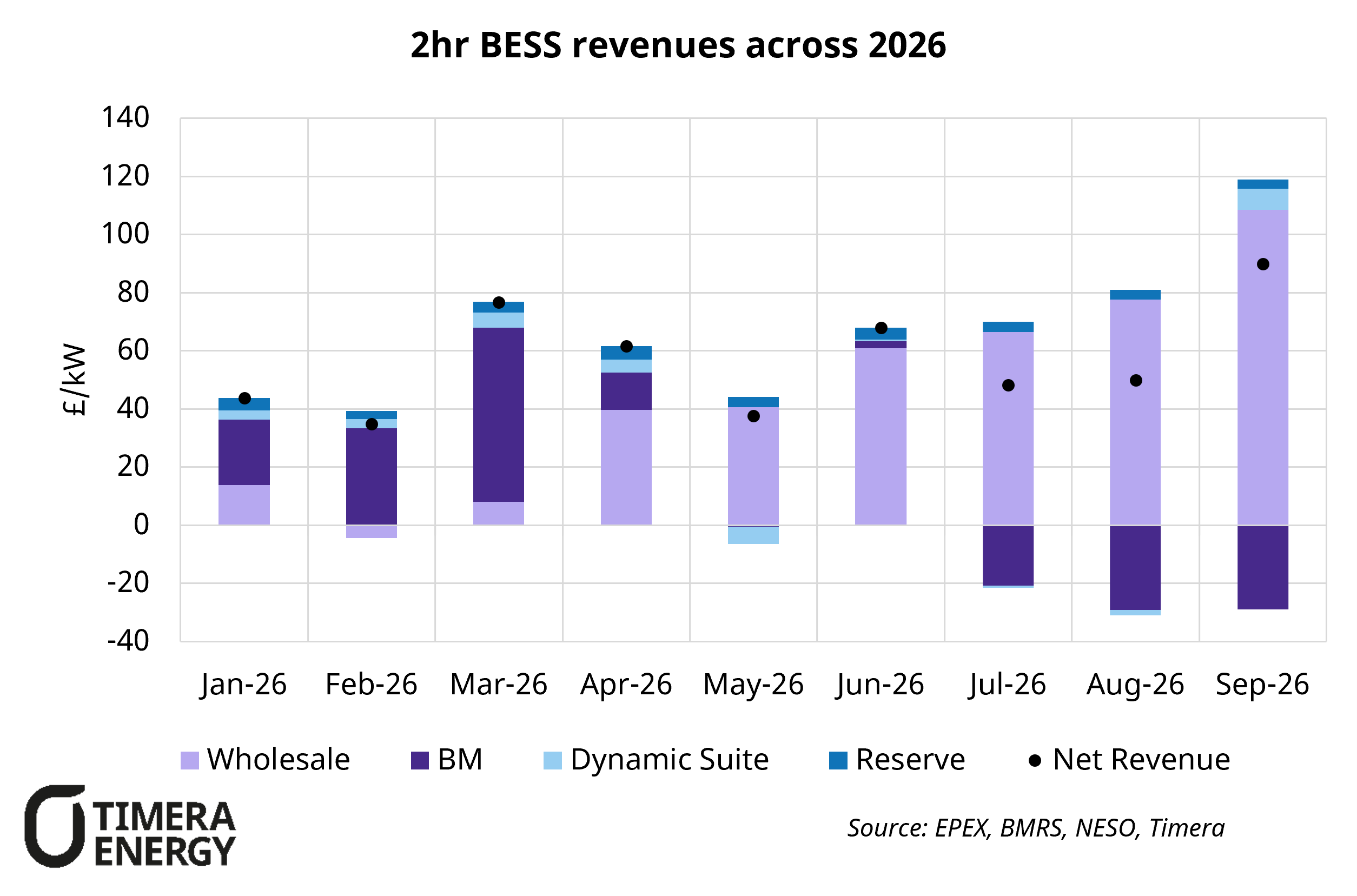
September saw a clear resurgence in GB battery revenues, as shown in chart 1. Two factors have driven the recovery. NBP prices have firmed as the Iran conflict continues to weigh on gas markets heading into winter, while wind output has picked up again with the seasonal shift as shown in chart 2. The combination of higher gas prices and more variable wind has widened power price spreads, lifting wholesale revenues.
Chart 1: DA spreads vs NBP prices vs Wind in GB
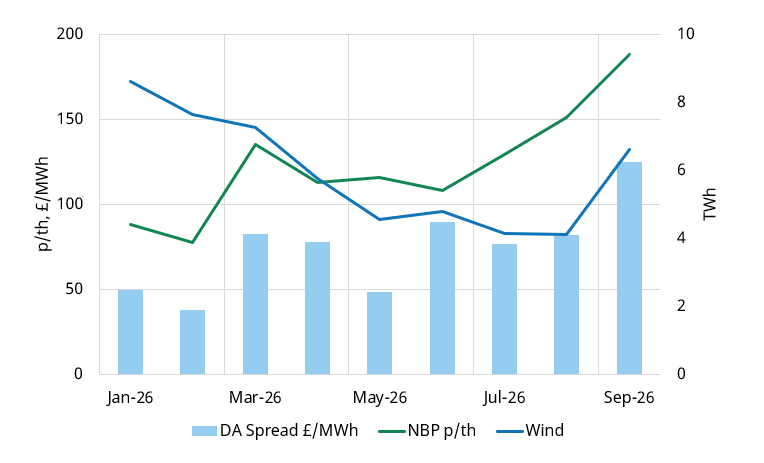
Source: BMRS, EPEX, ICE, Timera
Assets have responded by cycling harder and more often to capture these spreads. This is a marked contrast to winter 25/26, when optimisers used the BM tactically to capture DA/BM spreads and dialled back throughput in a lower spread environment.
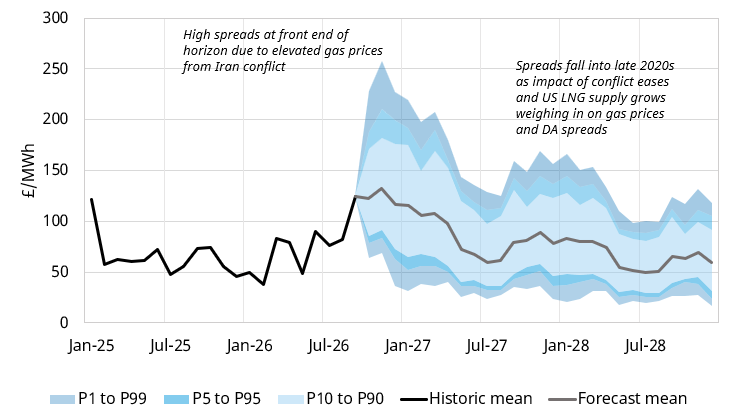
Our modelling from the Q3 GB BESS subscription points to continued volatility and value capture opportunity across winter 26/27 as shown in chart 3, driven by three factors:
- Elevated gas prices keeping the marginal cost of thermal plant high.
- Wind swings, from high output periods through to Dunkelflaute events.
- Tighter margins, with NESO increasingly reliant on continental imports during system stress, but constrained in how far it can trade against day ahead interconnector flows.
This will be welcome news for investors after a benign winter 25/26. But optimisers face a balancing act, the upside from higher volatility needs to be weighed against the degradation cost of deeper and more frequent cycling.
Chart 2: Forward looking GB BESS 1hr spread forecast from our Q3 26 GB BESS subscription service
Source: Timera, EPEX
If you are interested in discussing our views on GB BESS trading strategies and revenue outlooks, please get in touch with Arshpreet Dhatt at arshpreet.dhatt@timera-energy.com.
We have also recently launched our Q3 GB BESS subscription. This includes a detailed market report covering the key drivers of GB battery value, alongside our bankable revenue curves produced using our proprietary stochastic modelling framework.