


Congestion value that relies on repetitive re-trading should be treated as upside, not as bankable revenue
In June we set out why backward-looking BESS revenue indices are not a reliable barometer of future value, using Repetitive Re-Trading (RRT) as the clearest example. NESO’s industry webinar on 6 August showed where it has landed, and it is broadly the downside we flagged.
What NESO has proposed
Sixteen options were screened with industry through the first half of 2026. Two short-term options survived, Option 3A and the 3AA variant, with the emphasis clearly on 3A.
| Option | Description | Impact for Storage |
| 3A: Prioritise generation over storage – Near term | Amend the BPS so the control room reduces generation or increases demand first, then reduces storage exports, then increases storage imports, each in price order | Storage taken only after comparable generator bids are exhausted. Lower BM acceptance rates behind constraints and reduced congestion uplift. Wholesale and ancillary participation unaffected |
| 3AA: As 3A, but storage can charge – near term alternative | Same export sequencing as 3A, but storage import remains re-dispatched in merit order | Preserves BM activity on the charging side and lets storage absorb cheap or curtailed output. Does not remove the feedback loop, as charging still shifts expected state of charge
|
| 4B: GTMA Schedule 7A expansion – Enduring option | Use existing trading arrangements to agree positions with BMUs ahead of gate closure, reducing the need for redispatch in the balancing timeframe | Opportunity cost of losing the ability to re-optimise in real time, but that cost can be priced into the trade. Revenue shifts from BM acceptance to a negotiated pre-gate position |
| 6A: Capacity reserve market – Enduring option | NESO tenders competitively for storage availability during known or forecast constraint periods, with utilisation called off through the BM | Converts uncertain BM uplift into a contracted availability payment. Value depends entirely on tender clearing prices and how tightly availability obligations bind |
3A amends the Balancing Principles Statement* (BPS) so that, when managing an export constraint, the control room reduces generation or increases demand first, then reduces storage exports, then increases storage imports, each within those steps in price order. Storage behind a constraint is therefore re-dispatched only after comparable generator bids are exhausted, even where storage bids are cheaper. Assets can still self-dispatch to import, and remain free to participate in wholesale and ancillary markets.
*Balancing Principles Statement is how NESO decides the BM is dispatched.
NESO puts the cost at £58m to £98m in calendar 2025, growing around 50% year on year. Ofgem’s figure for FY25/26 was £99m. The estimates differ, however the key point here is that this is an issue gaining increasing industry and political attention.
A BPS change sits largely within NESO’s remit and avoids the code modification process entirely. That is why 3A scored well on the shortlisting framework, and why it could be live inside six months: consultation across September and October, with changes effective from late 2026.
Four enduring options go to cost benefit assessment over one to two years, with a recommendation due in early 2027: a single discharge cycle per constraint period (3C), the same with charging unrestricted (3CA), expanded GTMA Schedule 7A trading (4B), and a capacity reserve market (6A).
Industry pushback
Three lines of challenge stood out from industry players including optimisers, developers and more:
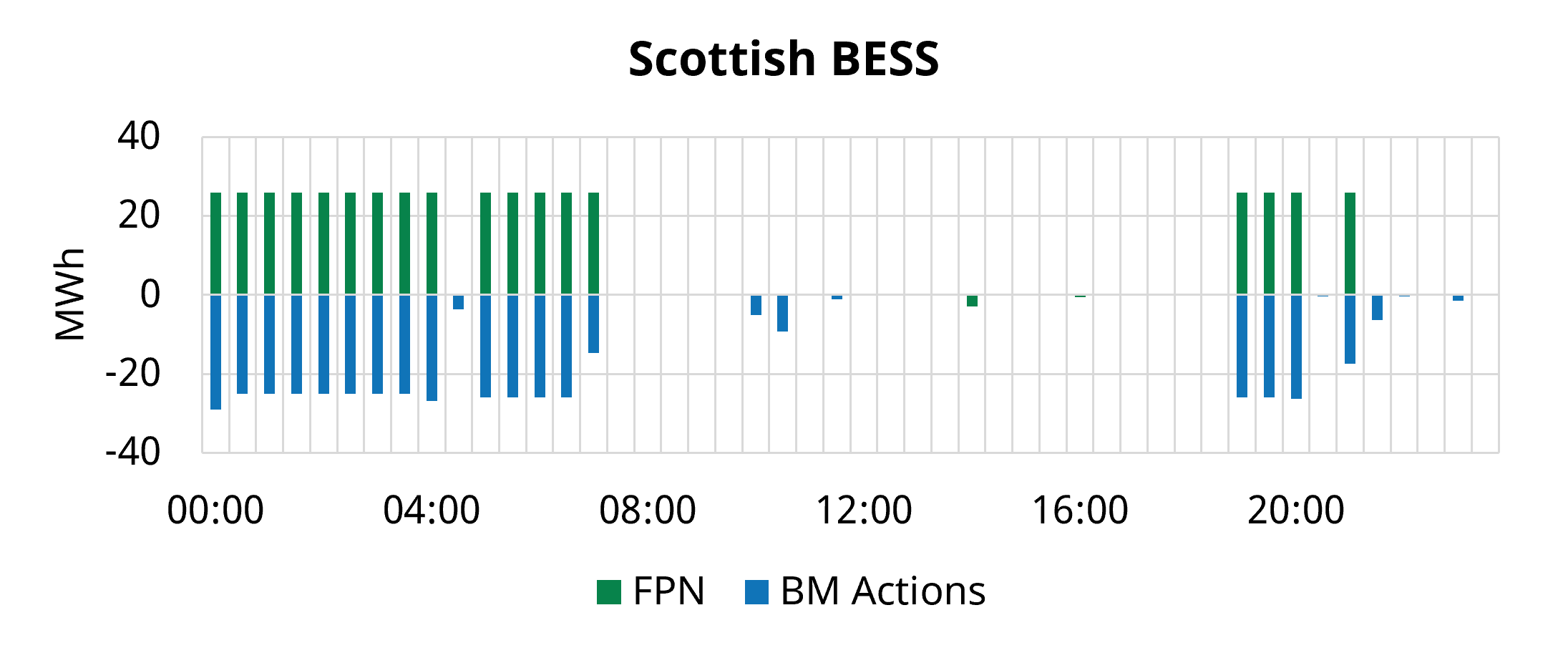
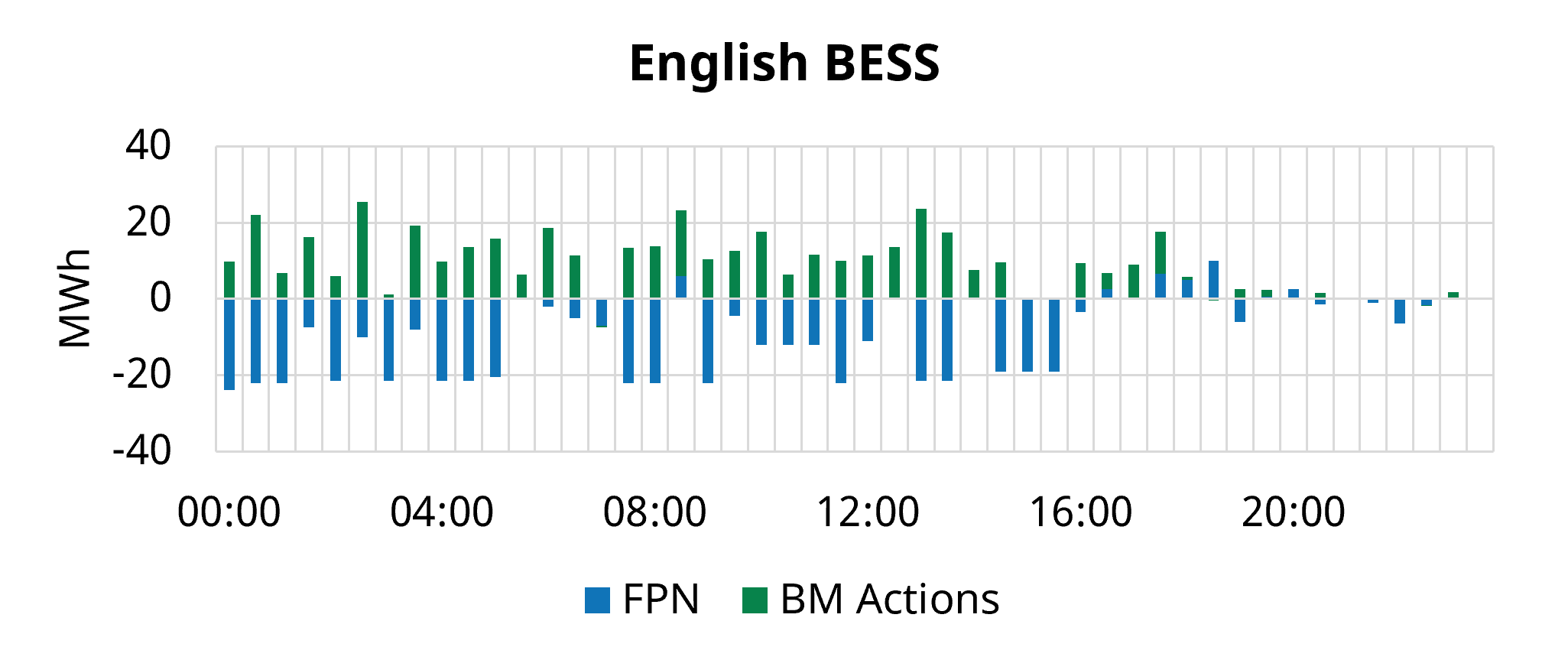
Storage in the south behaves the same way: RRT is a response to a national price signal that ignores local network conditions. RRT is not just a problem in Scotland and this solution ignores the rest of GB. (see example below of multiple hours of FPNs being unwound for English and Scottish BESS, actions are not on the same day)